
Preservation
Native America has helped preserve natural habitats of Long Island, New York.

Hauppauge Springs
Native America, formerly based in Hauppauge, Long Island, nearby the Hauppauge Springs is a natural freshwater source. These freshwater springs are the headwaters of the scenic Nissequogue River. The Nissequogue is one of four rivers of Long Island and provides wildlife habitat for fish, waterfowl, mammals and wetland plant life. While the wetland portion of the Hauppauge Springs are technically protected under New York State law, the drier upland portions are not. Native America became involved in a preservation effort to help protect this surrounding undeveloped land as a buffer zone for wetlands.

The Native America Preserve
When the ground was still groaning under heavy cold in 1995, two acres of land in Hauppauge in the middle of Long Island, New York were put aside as a private preserve called Native America. The term Native America was chosen because the purpose of the preserve was to remove the invasive plants and the ornamental plants and allow the local native plants to reclaim the landscape of these two acres of America. The preserve was expanded, by purchasing additional adjacent undeveloped property, to enlarge it to 3.3 acres. This was an uncommonly large area in the midst of suburban Long Island, with a view of Manhattan from treetops.
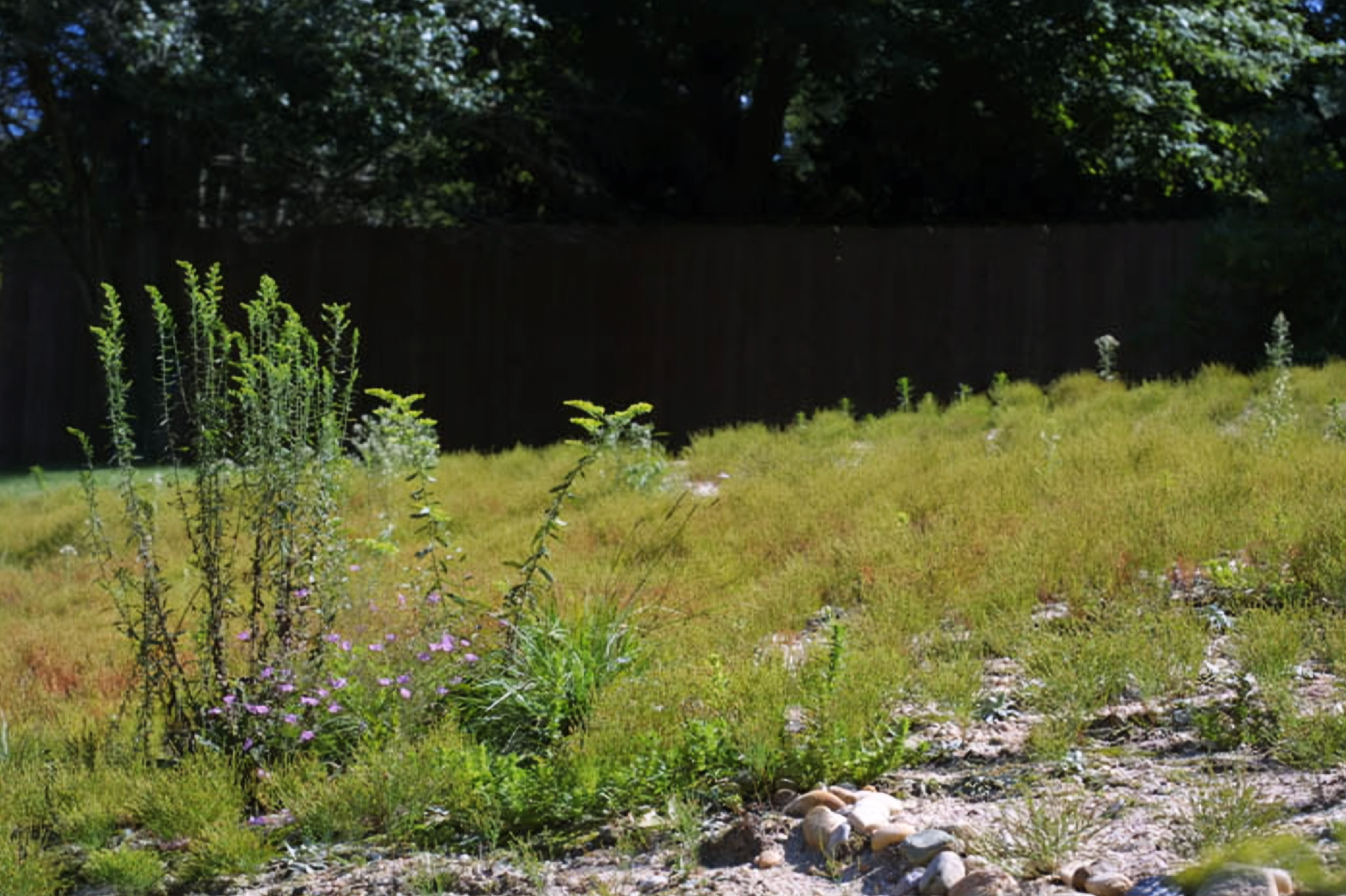
The Paumanok Project
It was an objective of the Paumanok Project to remove the nonnative introduced vegetation of a front yard of a typical suburban residential property, owned by Native America in Hauupauge, Long Island, New York, and monitor and guide a recuperation of its historic native vegetation.